

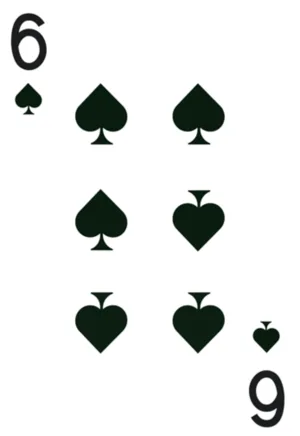
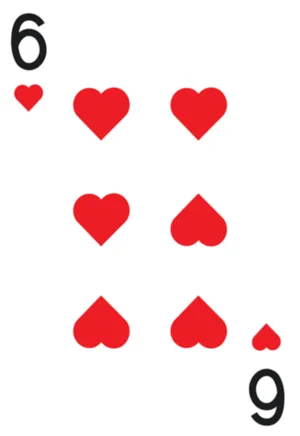
 Split.
Why basic strategy says split
Hard 12 is the archetypal stiff hand. Two hands starting from six are not great, but against a dealer likely to bust they are worth more than one 12.
If the table restricts you: If splitting is not allowed, play the hand as hard 12: stand.
Engine explanation: Split with a pair of 6s against 5. Play these as two separate hands under the double-after-split rules. This is a long-run basic-strategy decision, not a prediction of the next card.
Pair of 6s against every upcard
H hit · S stand · D double · P split. Select a cell for its page.
Nearby pairs against a 5
| Hand | Move | |
|---|---|---|
| Pair of 2s | Split | Why → |
| Pair of 3s | Split | Why → |
| Pair of 4s | Split | Why → |
| Pair of 5s | Double | Why → |
| Pair of 6s | Split | Why → |
| Pair of 7s | Split | Why → |
| Pair of 8s | Split | Why → |
| Pair of 9s | Split | Why → |
| Pair of 10s | Stand | Why → |
| Pair of aces | Split | Why → |
Training rules: six decks · dealer stands on soft 17 · no surrender
This is a separate educational profile. Rules can differ between app tables and other games.
- Six decks. Dealer stands on all 17s, including soft 17.
- US hole card and peek: decisions assume the dealer has checked and does not have blackjack.
- Double any first two cards, including after splitting. Doubling ends the hand after one extra card.
- Split equal card values into at most four hands. Split aces receive one card each; no resplitting aces.
- No surrender. A natural blackjack pays 3:2; 21 after splitting is not a natural.
- Total-dependent strategy. No card counting or expected-value estimates.
Profile six-deck-s17-das · rules 1.0.0 · strategy 1.0.0. The trainer asks for one decision per hand; it does not simulate wagers or settlement.